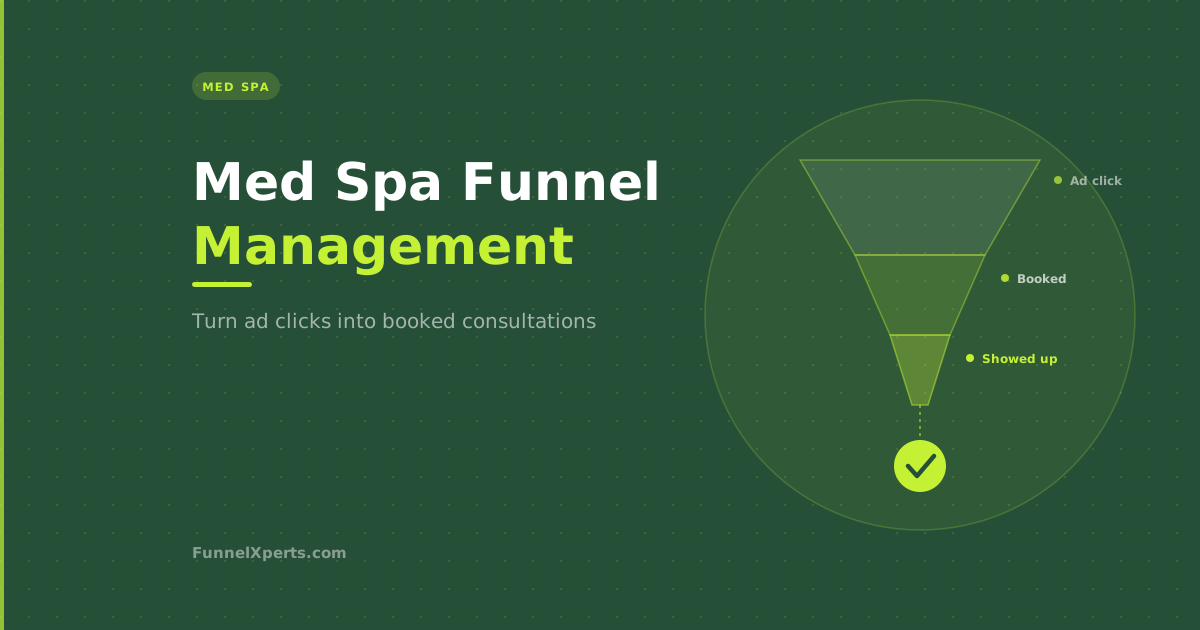
If you run paid ads for a med spa, you already know the click isn't the hard part. Getting someone to tap a Botox or laser ad is comparatively easy. The hard part is what happens in the next ten minutes, and then again in the next ten days: does that click turn into a booked consultation, and does that booking turn into a person who actually shows up. That gap, between interest and a kept appointment, is what med spa funnel management is actually about, and it's where most of the ad spend in this industry quietly disappears.
Most articles on med spa marketing talk about the funnel as if it ends at "form submitted" or "call booked." For a med spa, that's the middle of the funnel, not the end. The treatment itself is sold in person or on a phone consultation, after trust has been built. This post is about the specific mechanics of that funnel: the offer structure that gets cold traffic to book, the ad creative that earns enough trust to get a stranger to hand over their details, the landing page and follow-up systems that convert clicks into kept appointments, and the no-show prevention that protects the ad spend you've already paid for.
The Real Conversion Event Is a Booked Consultation, Not a Sale
Most local service funnels end at "job booked." A med spa funnel has an extra step baked in: the consultation itself is the product being sold by the ad, and the treatment or package is sold afterwards, usually by a provider or consultant sitting across from the client.
This matters because it changes what "conversion" means for every part of the funnel. Your ad isn't trying to sell Botox. It's trying to get someone curious enough about Botox to book a free or low-cost consultation with a real person. Your landing page isn't a sales page, it's a booking page. Your follow-up sequence isn't chasing a purchase decision, it's chasing a calendar decision.
Treating a med spa funnel like a standard e-commerce or lead-gen funnel usually leads to one of two mistakes. Either the ad and landing page try to oversell the treatment itself (which invites scepticism from cold traffic and, depending on the platform, can run into ad content restrictions around health and beauty claims), or the funnel stops the moment someone books, on the assumption that a booked slot equals a done deal. Neither is true. The booking is the goal of the top of the funnel. Getting them to actually sit down for it is the goal of everything that happens next.
Building Ad Creative That Earns Trust From a Cold Audience
Aesthetic treatments carry more hesitation than most local services. Someone searching for a plumber has an obvious, urgent problem. Someone scrolling past a filler or laser ad is making a discretionary, often slightly nervous decision about their own face or body, usually while comparing several providers they've never met. The ad has to do more trust-building work than a typical local-service ad, in a shorter space.
A few things that consistently do this work better than a generic "book now" ad:
- Before-and-after results, shown honestly and without exaggerated claims about outcomes.
- The provider's face and credentials, not just the clinic's logo. People are booking a consultation with a person, and putting that person in the ad (rather than only in a bio page nobody visits) shortens the trust-building the landing page and consultation still have to do.
- Real reviews, not just a star rating graphic. A short quote from an actual client, ideally treatment-specific, does more for a cold click than a generic "5-star rated" badge. This lines up with wider consumer behaviour: BrightLocal's 2024 Local Consumer Review Survey found that 75% of consumers say they always or regularly read reviews for local businesses, and a med spa client is, if anything, reading more carefully given the stakes involved.
- A specific, named treatment, not a vague "look and feel your best" message. "Botox consultation" or "laser hair removal for [area]" converts better than broad wellness messaging because it matches what the person was already thinking about.
Platforms have specific rules around health, beauty and medical ad content, and those rules change and get enforced unevenly. It's worth checking current ad policy for your platform and treatment category before launching, rather than assuming last year's approved ad will run the same way today.
If your ads are already generating clicks but not calls or bookings, the issue is usually somewhere between the ad promise and the landing page delivery. Our breakdown of why Google Ads generate clicks but not calls covers the mismatch problems that show up most often, and most of them apply directly to med spa campaigns.
The Landing Page and Offer Structure That Gets Cold Traffic to Book
A med spa landing page has one job: get a qualified stranger to book a consultation slot before they leave the page. Everything on it should point at that one action.
The offer at this stage should lower the barrier to booking, not the barrier to buying. A "free consultation" or a low, clearly stated introductory price (for example, a reduced first-visit rate on a specific treatment) works because it matches what the person is actually deciding: whether to talk to someone, not whether to commit to a full package. Package pricing and membership options belong at the consultation, presented by a person who can answer questions, not buried on the landing page where they can be misread out of context or compared unfavourably against a competitor's headline number.
The booking mechanism should be a live calendar, not a "we'll call you" form. A form that just says "someone will be in touch" adds a delay and a decision point that a lot of warm-but-not-hot leads won't survive. A calendar embedded directly on the page, showing real available slots, converts a decision ("I'm interested") straight into a commitment ("I'm booked for Thursday at 2pm") in one motion, which is exactly the conversion event that matters here.
The page needs a phone number that's actually answered. A portion of your traffic, particularly on mobile, will skip the form entirely and call. If that call goes to voicemail or rings out, you've paid for the click and lost the lead anyway. This is one of the more avoidable losses in a med spa funnel: missed call text-back automatically texts anyone whose call you miss, so a slow front desk or an after-hours click doesn't just evaporate.
Keep the page narrow. One treatment focus per landing page, matched to the ad that sent the traffic there, converts better than a general "our services" page that makes the visitor do the work of figuring out what's relevant to them.
Why Owning This Funnel Beats Renting Leads From a Directory
A lot of med spas, especially newer ones, supplement paid ads with leads bought from aesthetic marketplaces and directory sites. These can work as a top-up, but they come with a structural problem: the same lead is usually sold to several nearby providers at once, and the person filling in the form has no particular loyalty to you. You're competing on speed and price for someone who was never really "yours."
A funnel you own, your own ads, your own landing page, your own booking calendar, produces leads that came looking for you specifically, and it's the only version where the trust-building work (the reviews, the provider's face, the before-and-afters) actually compounds over time instead of resetting with every purchased lead batch. Our guide to getting service leads without buying shared lead lists goes into this trade-off in more detail, and the underlying logic holds just as true for a med spa as it does for a contractor or cleaning business.
Stopping the Leak: Why Med Spa Consultations No-Show So Often
Here's the part of the med spa funnel that gets the least attention and probably costs the most: a meaningful share of booked consultations simply don't show up. It's a predictable pattern for elective, discretionary appointments. There's no urgent problem forcing the person to attend, the commitment made at booking was small (often free), and a lot can change in someone's mind, and calendar, between clicking "book" and the day itself.
Two things move this number more than anything else:
A confirmation and reminder sequence that runs without anyone remembering to send it. A confirmation immediately after booking, then a reminder the day before, then a same-day reminder, catches people while the appointment is still front of mind and gives them an easy way to reschedule instead of just not turning up. Text is the right channel for this: Twilio's messaging benchmarks put SMS open rates above 95%, which is a different order of visibility to an email reminder sitting in an inbox. Our post on appointment reminder texts that cut no-shows has templates and the automation logic behind this specifically.
A deposit or card on file for the consultation slot. This is the single biggest lever most med spas haven't pulled. A small deposit, ideally redeemable against treatment on the day, doesn't meaningfully deter a genuinely interested prospect, but it does filter out the casual booker who was never likely to attend anyway, and it gives everyone who does book a small reason to actually turn up. For a business paying for the ad click that generated the booking, protecting that booking is worth the minor friction.
The Follow-Up Sequence for People Who Didn't Book
Not everyone who clicks your ad or lands on your page books a consultation on the first visit. This is normal, and it's one of the reasons a med spa funnel needs a longer follow-up window than most local service funnels. The consideration cycle for an elective treatment is naturally slower: people research, compare providers, wait for a pay cheque or a free weekend, and think about it. Treat that first visit as the start of a relationship, not a lost lead, and this is where a lot of the funnel's ROI actually shows up.
Velocify's research on lead conversion found that it typically takes 5 to 8 follow-up touches to convert a lead, and that pattern applies directly here: an interested but not-yet-booked contact who gets one automated follow-up email is far more likely to book weeks later than someone who was never followed up with again after the initial click. Retargeting ads to people who visited your site or engaged with your ad but didn't book, paired with an SMS and email sequence that offers helpful information (what to expect at a consultation, before-and-afters relevant to their treatment interest, an answer to a common hesitation) rather than just repeating "book now," tends to be one of the highest-return parts of the entire funnel, precisely because the audience is already warm.
The mechanics of this follow-up matter as much as the content. Lead follow-up automation that fires the right message at the right interval, without a team member having to remember to send it, is what makes an 8-touch sequence realistic rather than a plan that quietly stops after touch two because someone got busy.
Presenting Packages and Pricing Without Turning the Consultation Into a Hard Sell
Once someone shows up, the funnel's job shifts from "get them here" to "give the provider what they need to close well." A few structural things make this easier without needing a harder sales pitch:
Package and membership pricing should be prepared before the consultation, not built on the fly. A clear, simple presentation of options (single treatment, a package of sessions, a membership) that the provider can walk through takes the awkwardness out of the pricing conversation and lets it focus on what the client actually wants.
Financing or payment plan options should be mentioned before the price is, not after. For higher-ticket packages, knowing a payment plan exists changes how someone hears the number. This is a small sequencing detail that consistently affects close rates on discretionary purchases.
A short pre-consultation questionnaire helps the provider walk in prepared. Knowing what someone is interested in, and roughly what's holding them back, before they sit down turns the consultation into a conversation rather than a discovery process, and shortens the path to a decision on the day.
None of this needs to happen manually. A booking flow that collects the questionnaire, sends the confirmation and reminders, and flags no-show risk can run automatically once it's set up properly, which is the same infrastructure used for scheduling and follow-up more generally, on the operational side of running the spa day to day.
Building This Without Duct-Taping Six Tools Together
A lot of med spas end up running this funnel across separate tools: one platform for ads and landing pages, another for booking, a text reminder app bolted on afterwards, and a spreadsheet or the front desk's memory for follow-up. Every join between those tools is a place where a lead, a reminder, or a follow-up message can quietly fail to send.
The platform we build this on for clients is GoHighLevel, because landing pages, calendar booking, two-way SMS, automated reminders and follow-up sequences all live natively in one system rather than being stitched together. But the platform is the easy part. The work that actually moves the numbers is the funnel design sitting on top of it: the offer that gets cold traffic to book, the reminder sequence that gets them to show, and the follow-up that catches everyone who didn't convert the first time.
That's what we build and manage for med spa clients. Not a GoHighLevel account handed to you to figure out, but the ads-to-booked-consultation funnel, set up, tested, and maintained. If you want a straight look at where your current funnel is losing bookings, book a free Systems Review and we'll walk through your ads, landing pages, and follow-up to show you exactly where the leaks are and what fixing them would look like.
Written by Muhammad Naimt Ullah, CRM and automation specialist at FunnelXperts.