Most dental marketing advice is written as if every enquiry is the same: someone wants a checkup, they book online, job done. That covers a lot of general dentistry, and it is genuinely low-friction. Nobody agonises for two weeks over whether to get their teeth cleaned.
Invisalign, implants, veneers, and cosmetic whitening are a different animal entirely. These are considered purchases with a real price tag attached, and patients treat them the way they'd treat any other big decision: they research, they compare, they often sit on a quote for a while, and in a lot of cases they get consultations at more than one practice before choosing where to go ahead. That is a sales funnel, whether a practice thinks of it that way or not, and it needs to be run like one.
This post is about building a dentist funnel specifically for that high-value, elective side of the practice, moving someone from a Google or Instagram enquiry through to a booked consultation, and from a consultation through to an accepted treatment plan. It is not about recall reminders or routine appointment scheduling for existing patients. That is its own operational system, and worth building well, but it solves a different problem to the one covered here.
Why "Just Book Them In" Doesn't Work for High-Value Cases
For a routine cleaning, the entire funnel is: see the ad, click, book online, show up. There's no real decision-making gap to manage because there's nothing much to decide.
Invisalign and implant enquiries don't work that way. Someone searching "Invisalign near me" or "dental implants cost" is usually early in a research process, not ready to commit to a practice. They're likely to fill in more than one enquiry form, take more than one phone call, and sit with the information for a few days before booking a consultation, let alone before agreeing to go ahead with treatment.
If a practice treats that enquiry the same way it treats a checkup booking, sends an automated confirmation and waits for the patient to call back, most of those enquiries go nowhere. The patient either books wherever responds first and feels most reassured, or they drift, get busy, and never follow through with anyone. Either way, the practice that built no real funnel around the enquiry loses the case to one that did, and the lost case is worth a lot more than a missed checkup.
Stage One: Turning the Enquiry Into a Booked Consultation
The enquiry itself, whether it comes from a Google Ads click, an Instagram DM, or a contact form on the practice website, is only the start. What happens in the minutes and days after it determines whether it turns into a consultation at all.
Speed matters more here than almost anywhere else in the practice. Someone who has just enquired about Invisalign is very likely enquiring elsewhere at the same time. Research from MIT and InsideSales.com found that contacting a lead within five minutes makes it dramatically more likely to convert, compared to waiting even half an hour. A dental practice competing for a five-figure case of aligners or implants across a city with several other providers cannot afford to be the practice that calls back the next day.
This is where a lot of practices leak enquiries without ever knowing it. The lead comes in through the website, sits in an inbox or a generic "new enquiry" folder, and gets called back whenever the front desk has a gap between patients. By then, the patient has often already booked a consultation somewhere else. If this pattern sounds familiar, it's worth reading our breakdown of why Google Ads generate clicks but not calls: in most cases the ad isn't the problem, what happens after the click is.
The same logic applies to missed calls. A patient calling to ask about implant pricing who gets no answer and no voicemail return is a patient who has just called the next practice on their list. A simple fix that recovers a surprising number of these enquiries is automatically texting back anyone whose call goes unanswered, so the conversation continues by text even when nobody was free to pick up.
Once contact is made, the goal of this first stage is narrow: get a consultation booked. Not to answer every clinical question over the phone, not to quote a price sight unseen, just to move the person to an in-person or video consultation where the actual assessment and conversation can happen properly.
Stage Two: The Consultation Is Not the Finish Line
Here is where a lot of dental funnels quietly fall apart. The consultation happens, the practice gives the patient a treatment plan and a price, and then the process stops. The patient is told to "have a think about it" and call back when they're ready.
Most won't call back. Not because they've decided against it, but because life gets in the way, other quotes are still being weighed up, and there is no reason for them to be the one to restart the conversation. A treatment plan that isn't accepted on the day of the consultation needs the same discipline a quote needs in any other business: a structured follow-up sequence, not a single afterthought call three weeks later when someone happens to remember.
This is genuinely different from routine recall. A patient overdue for a six-month checkup gets a standard reminder because the message and the reasoning barely change from patient to patient. A patient sitting on a quote for implants or a course of Invisalign needs a more consultative sequence: information that addresses common hesitations, a check-in on questions that came up in the consultation, and enough patience and professionalism in the tone that it reads as helpful rather than pushy. Getting that tone wrong (chasing too hard, too generically, or too often) can undo the goodwill built up in the consultation itself.
Financing and payment options often decide these cases. A patient who is genuinely interested in treatment but hesitant about the total cost is frequently deciding based on how manageable the payments look, not whether they want the outcome. Practices that present financing or payment plan options clearly, and follow up specifically referencing that option, tend to convert more of these hesitant cases than practices that only ever restate the full price. This is a presentation and communication point, not financial advice: the practice's job is to make sure the patient knows what options exist and isn't left to assume treatment is unaffordable by default.
Building the Follow-Up Sequence for a Quoted Treatment Plan
A workable sequence for a high-value treatment plan that wasn't accepted on the day generally needs several touches spread out over a few weeks, not one or two. Velocify's research into sales follow-up found that most conversions happen somewhere between the fifth and eighth contact attempt, and a single follow-up call is nowhere near enough for a decision this size. A sensible structure looks like:
- Same day or next day: a short, warm thank-you message confirming the consultation and treatment plan details, so it's in writing and easy to refer back to.
- Within 3 to 5 days: a check-in that invites questions, particularly about anything that came up during the consultation that the patient seemed unsure about.
- Around week two: a message that surfaces financing or payment plan options if cost was a factor, along with a simple way to book if they're ready.
- Around week three or four: a lower-pressure touch, perhaps sharing a relevant patient result or answering a common concern about the procedure, without repeating the sales pitch outright.
- A final, respectful close-out message if there's still no response, one that leaves the door open without nagging.
Text messages carry a lot of this sequence well. Twilio's messaging benchmarks show SMS open rates above 95%, which is far higher than email for this kind of time-sensitive nudge. A short text that says the practice is thinking of the patient and happy to answer questions tends to get read and often gets a reply, where a longer email sits unopened. Mixing SMS for quick check-ins with a longer email or call for the financing conversation usually outperforms relying on a single channel.
Running this manually, remembering which of a dozen quoted patients is due for which message on which day, is exactly the kind of task that gets dropped when the practice gets busy. It's the same underlying problem covered in our guide to lead follow-up automation: the businesses that stay in front of every prospect are the ones that have taken the sequence out of someone's memory and put it into a system that runs it automatically.
Seeing the Whole Funnel at a Glance
Once there is more than a handful of active enquiries and quoted treatment plans at once, a practice needs somewhere to actually see the state of each one. Who enquired this week and hasn't been contacted yet, who has a consultation booked, who was quoted and is mid-way through the follow-up sequence, and who accepted and is scheduled to start.
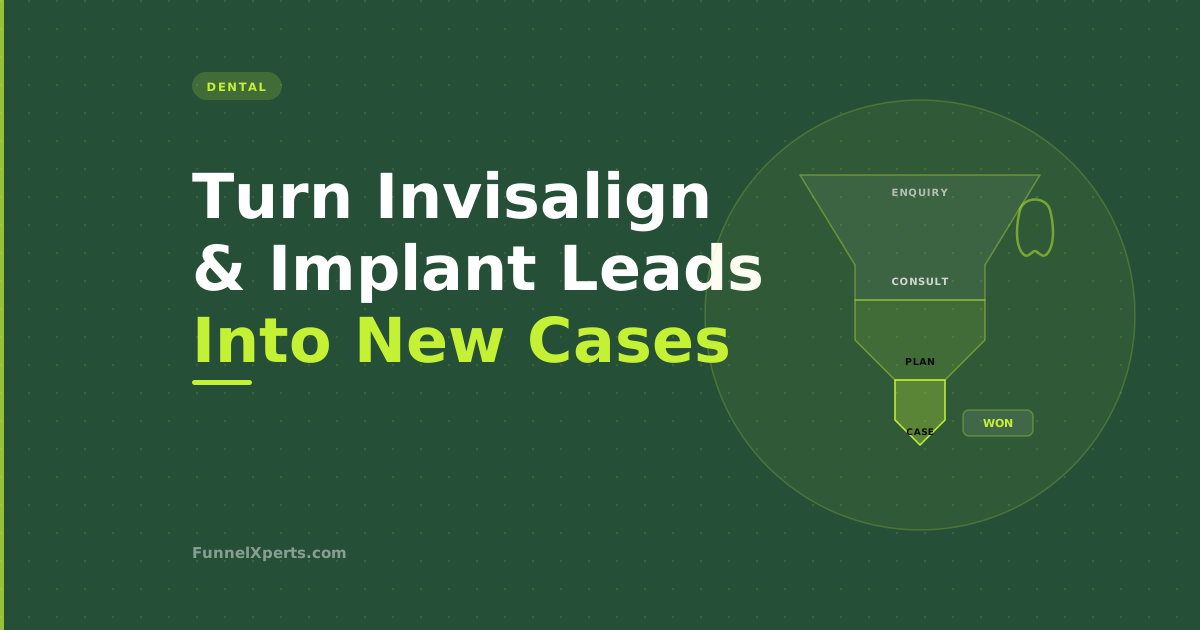
This is what a proper sales pipeline does for any business selling something with a decision cycle attached to it, and a dental practice running an Invisalign or implant program is exactly that kind of business, even if nobody at the front desk would describe it in sales language. Stages that map to reality, something like New Enquiry, Consultation Booked, Treatment Plan Presented, Following Up, and Accepted, mean nothing quietly drops out of view because it wasn't written down anywhere obvious.
Where the Enquiries Should Come From in the First Place
None of the above matters if there isn't a steady stream of genuine, high-intent enquiries reaching the funnel to begin with. For cosmetic and elective dental work, that mostly means paid search and social ads targeted at people actively searching terms like "Invisalign cost" or "dental implants near me," plus organic visibility from a strong Google Business Profile and reviews, since a large majority of people check reviews before choosing a healthcare provider. BrightLocal's 2024 Local Consumer Review Survey found that 75% of consumers always or regularly read online reviews before deciding, which matters enormously for a decision as personal as choosing who works on your teeth.
It's worth being deliberate about where enquiries come from rather than relying purely on shared lead-generation services, which tend to hand the same enquiry to several practices at once and put even more time pressure on the whole follow-up process described above. Our guide on generating your own leads instead of buying shared ones covers this in more general terms, and the same logic applies directly to a practice trying to build a reliable Invisalign or implant pipeline: enquiries that come to the practice exclusively are worth more, and are easier to nurture properly, than ones being fought over by three other providers at the same time.
What This Looks Like Set Up Properly
Put together, a working dentist funnel for high-value cases looks like this: an enquiry comes in from an ad or search, gets a response within minutes rather than hours, is guided toward a booked consultation, and if the treatment plan isn't accepted on the day, moves into a structured, multi-touch follow-up sequence that runs for several weeks without anyone having to remember to send it. Missed calls get an automatic text back so no enquiry goes silent by accident. Everything sits visibly in a pipeline so the practice always knows exactly how many cases are live and which ones need attention today.
This is a marketing and follow-up system, not a clinical one. It doesn't touch diagnosis, treatment decisions, or anything a dentist and patient work out together in the chair. What it does is make sure that the interest a practice is already generating through ads, search, and referrals doesn't leak away through slow responses, forgotten quotes, or a follow-up process that only exists in someone's head.
At FunnelXperts, this is the kind of system we build for dental practices as a done-for-you service: the enquiry capture, the instant response, the consultation booking, the treatment-plan follow-up sequences, and the pipeline that ties it all together, running on infrastructure like GoHighLevel behind the scenes but managed and maintained by us so nobody at the practice has to become a software administrator on top of everything else they do. If you want to see what this would look like for your practice, book a free Systems Review and we'll map your current enquiry-to-case process and show you exactly where it's leaking.
Written by Muhammad Naimt Ullah, CRM and automation specialist at FunnelXperts.